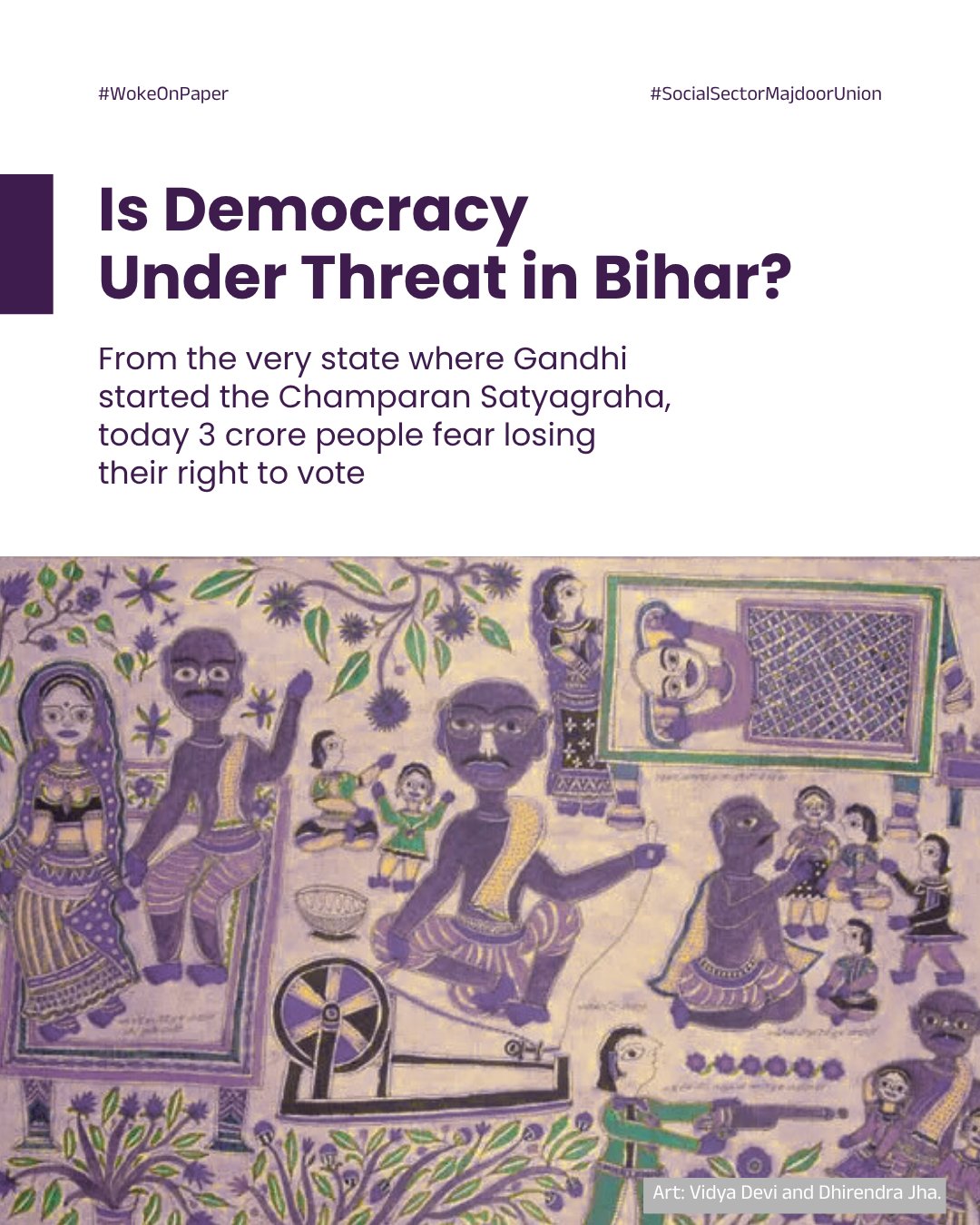
Is Democracy Under Threat in Bihar?
From the state where Gandhi began the Champaran Satyagraha, around 3 crore people now fear losing their right to vote.
A Routine Exercise?
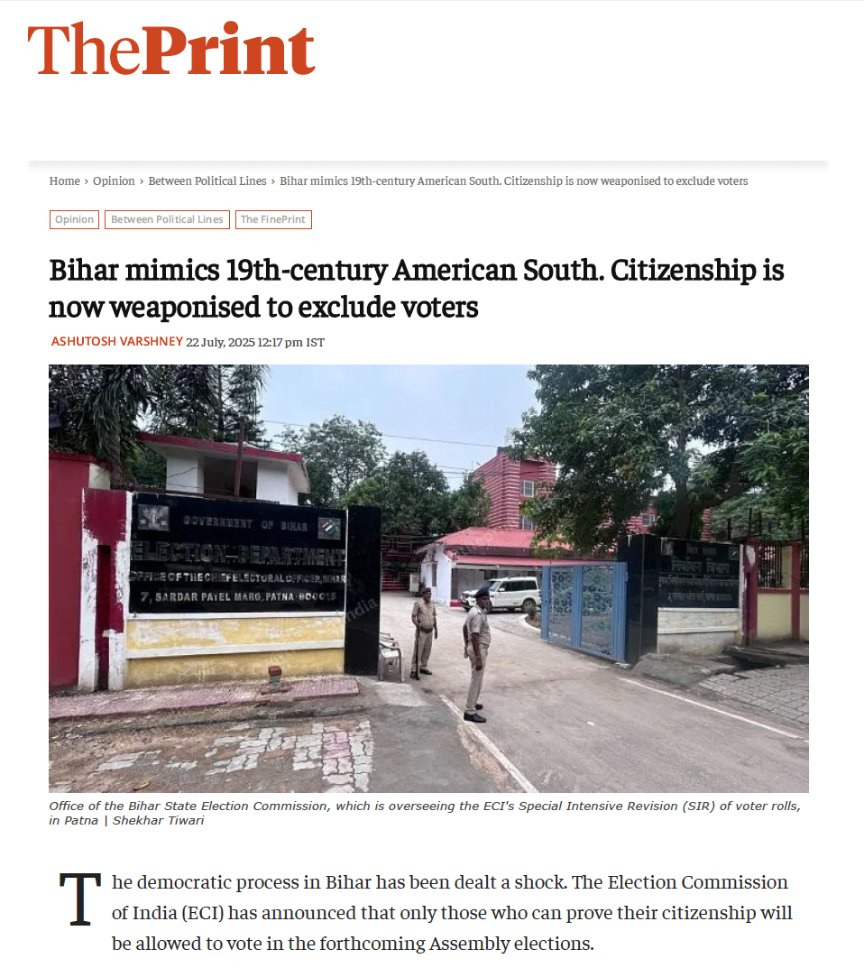
Bihar is going through a Special Intensive Revision (SIR) of its electoral rolls, ordered by the Election Commission of India (ECI).
The ECI calls it a routine measure for the "purity of rolls". Critics are raising serious alarms.
What the ECI Says It Is For
According to the ECI, the SIR is meant to:
- weed out illegal immigrants
- update voter lists for people who have migrated
- remove deceased voters
What Civil Society Says It Is
Civil society groups and activists see something very different. They call the exercise an "audacious attempt at mass disenfranchisement", or simply "votebandi".
Proof of Citizenship, for the First Time
For the first time, every voter must provide documentary proof of citizenship to stay on the list.
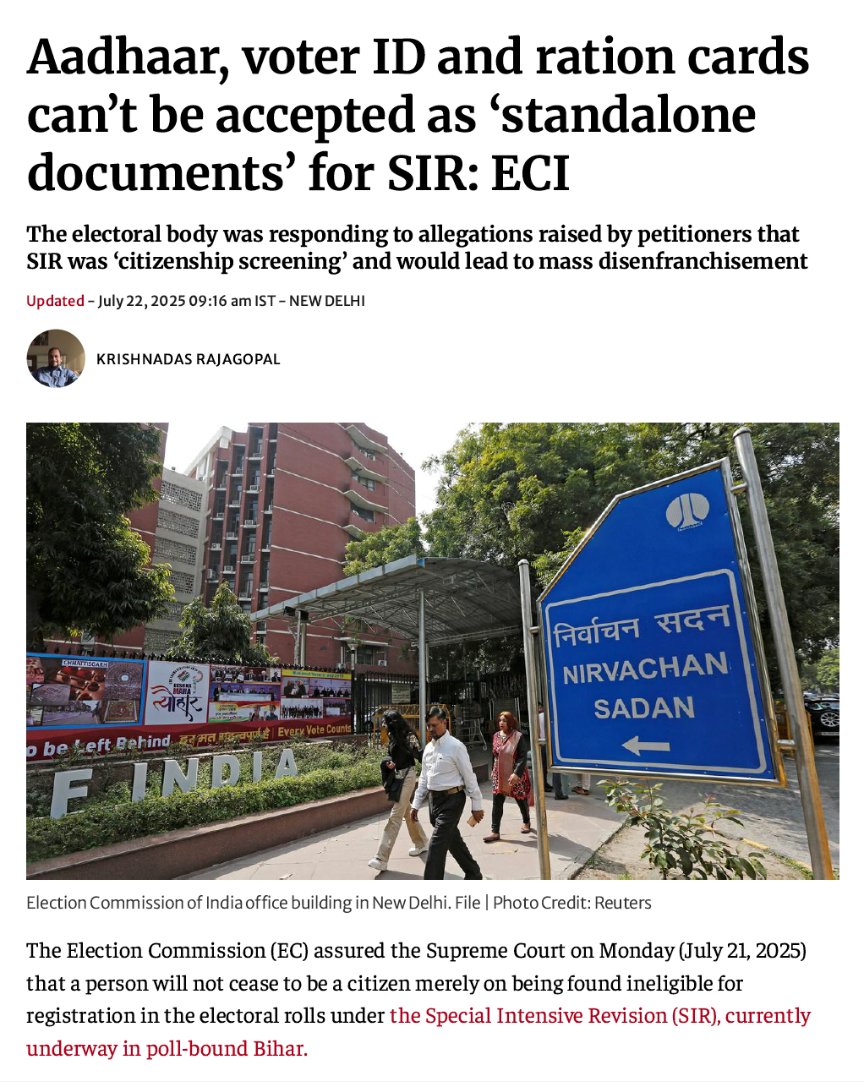
Crucially, the documents most people actually have — Aadhaar, Voter ID and ration cards — are not accepted as standalone proof of citizenship for this process.
Who Gets Left Out
Strict documentation rules do not hit everyone equally. They fall hardest on Muslims, Scheduled Castes, Scheduled Tribes and migrant workers, who often lack access to these specific documents.
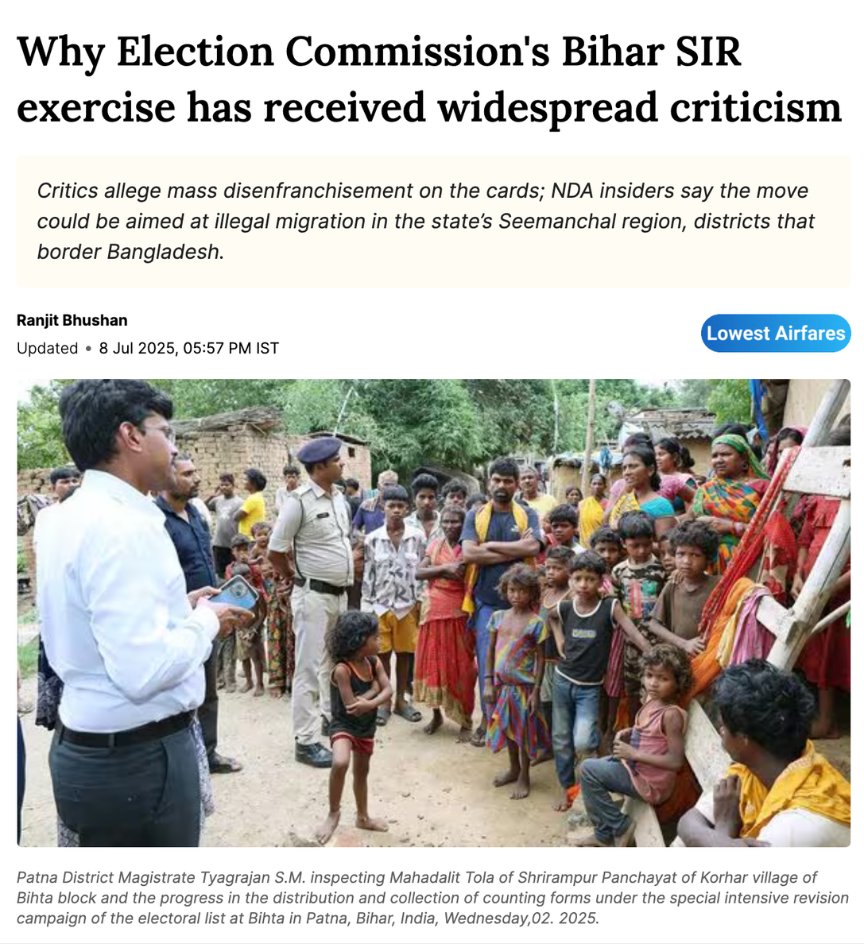
Bihar has high poverty and migration rates. Many residents simply do not have the birth certificates or parental records now being demanded.
Experts warn that the new requirements could disenfranchise around 3 crore voters, largely from marginalised communities, because of the stringent conditions and short timelines. It is widely seen as an "anti-poor move".
52 Lakh Names, and Counting
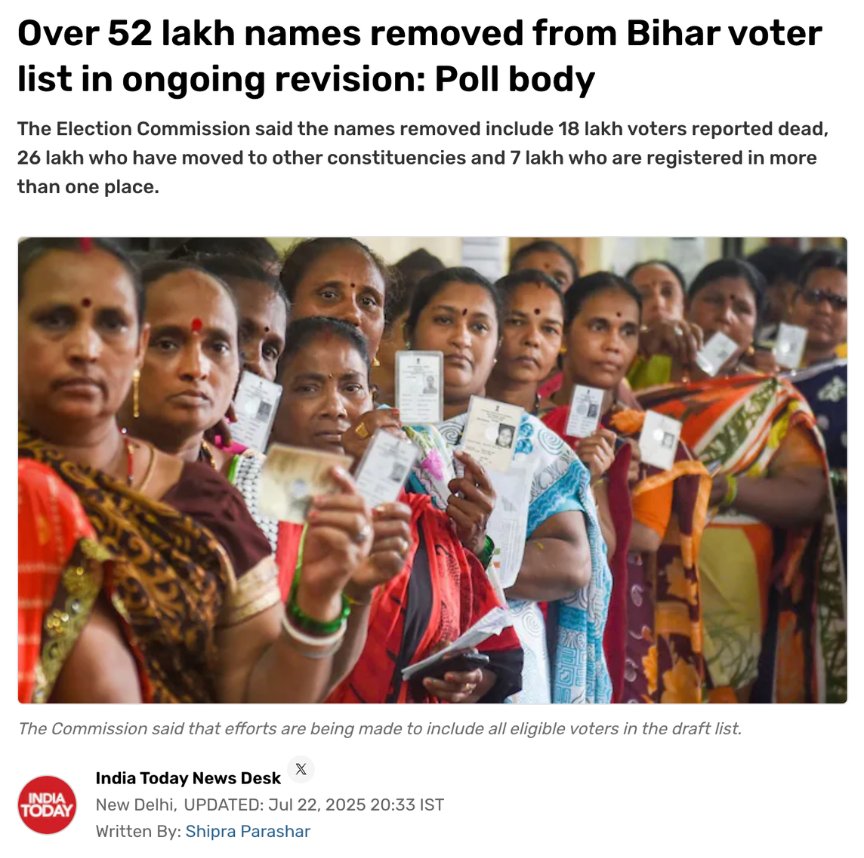
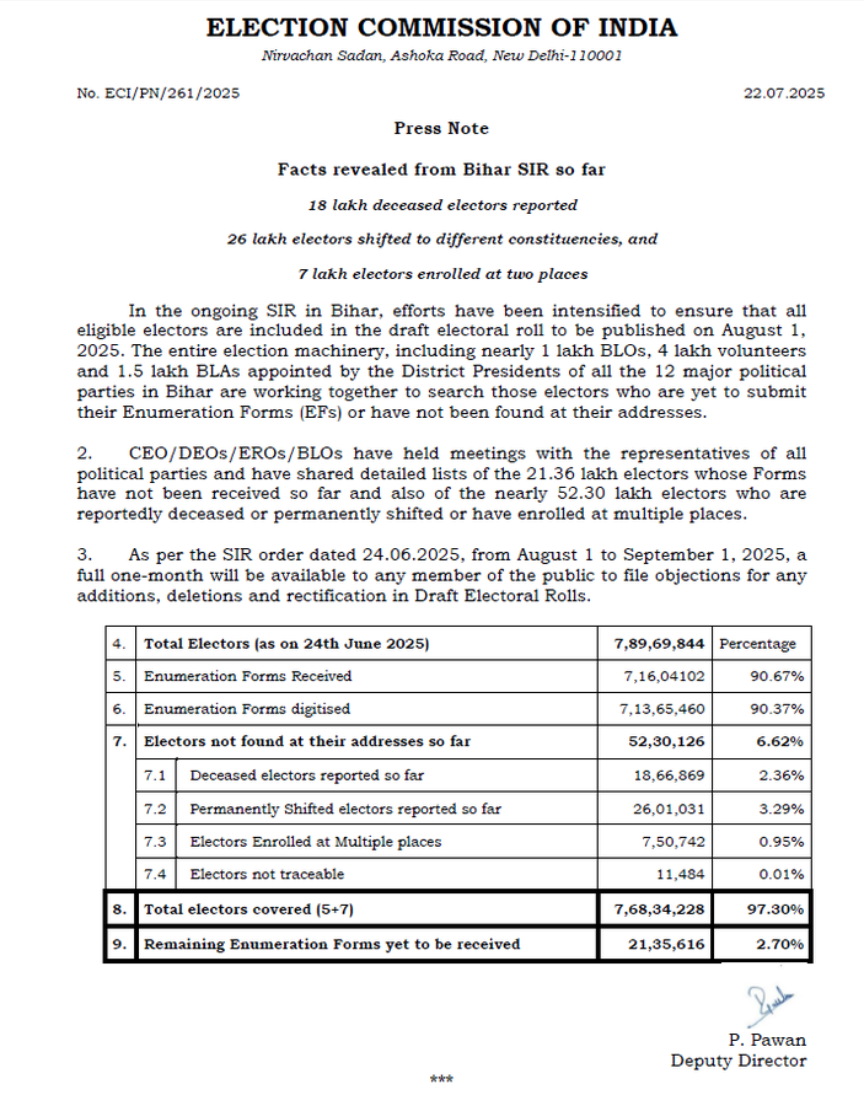
By the ECI's own count, over 52 lakh names have already been flagged for removal from Bihar's voter list: 18 lakh reported dead, 26 lakh said to have moved to other constituencies, and 7 lakh found registered in more than one place.
Another 21 lakh electors had not returned their enumeration forms. Taken together, that is more than 73 lakh people — over 9% of Bihar's electorate — whose place on the roll was in question barely a week before the draft roll was due on 1 August.
| Electors | Share | |
|---|---|---|
| Total electors (as on 24 June 2025) | 7,89,69,844 | 100% |
| Enumeration forms received | 7,16,04,102 | 90.67% |
| Enumeration forms digitised | 7,13,65,460 | 90.37% |
| Electors not found at their addresses | 52,30,126 | 6.62% |
| ↳ Reported deceased | 18,66,869 | 2.36% |
| ↳ Permanently shifted | 26,01,031 | 3.29% |
| ↳ Enrolled at multiple places | 7,50,742 | 0.95% |
| ↳ Not traceable | 11,484 | 0.01% |
| Forms yet to be received | 21,35,616 | 2.70% |
Source: Election Commission of India, Press Note ECI/PN/261/2025
A Question of Constitutional Power
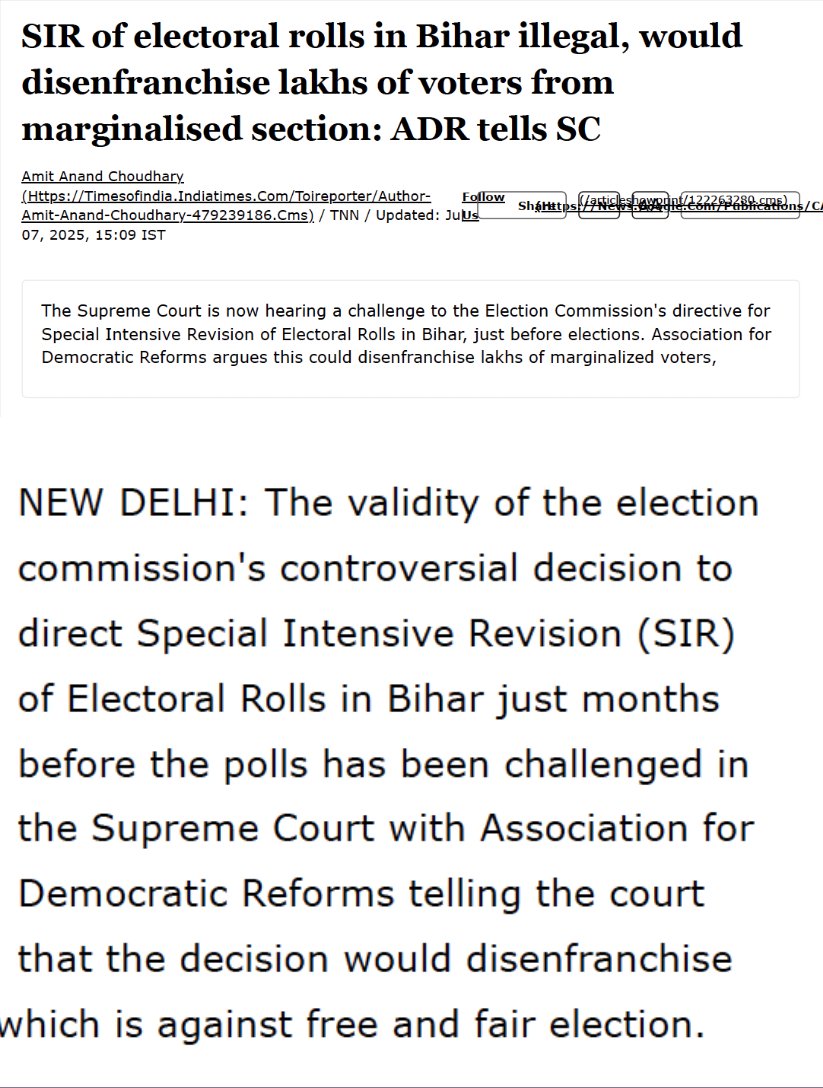
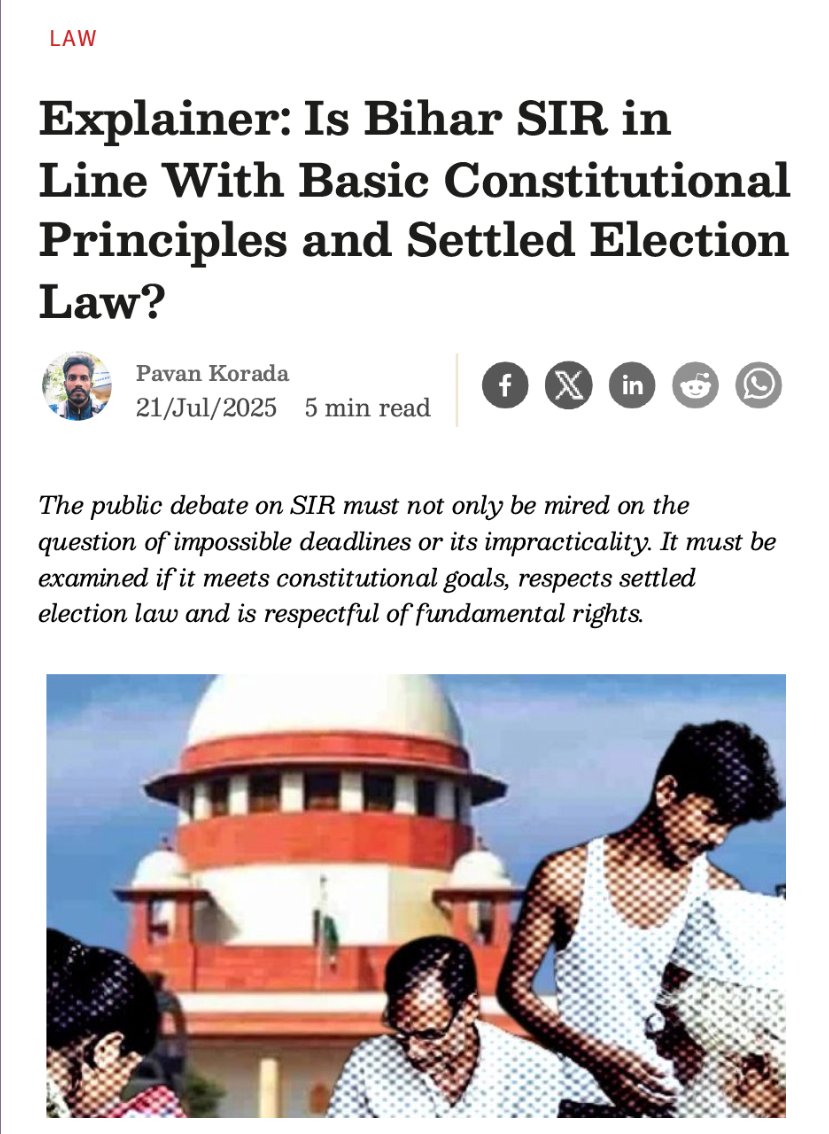
The SIR faces legal scrutiny for potentially violating constitutional principles (Articles 324 and 326) and settled election law such as the Representation of the People Act, 1950. The Supreme Court is hearing petitions challenging the decision.
Critics argue the ECI is exceeding its constitutional powers in two ways: by imposing new eligibility conditions that no existing law lays down, and by running a mass citizenship inquiry — a function the Citizenship Act, 1955 reserves for the central government.
The Burden Shifts to the Citizen
The ECI's order moves the responsibility of being on the voters' list from the state to the individual citizen. Anyone who fails to submit a fresh enumeration form by 25 July will automatically be left out of the draft rolls.
The way citizenship is being established, and the documents being demanded, could make this an exclusionary process — one that undermines the principle of universal adult franchise and the fair and inclusive elections that are the hallmark of Indian democracy.
Assurances That Don't Settle the Question
The ECI has assured the Supreme Court that being found ineligible for the electoral roll under the SIR will not terminate anyone's citizenship.
But the suddenness of the exercise has drawn its own criticism. Earlier revisions involved consultation with political parties; this one did not.
Why This Matters Beyond Bihar
What happens in Bihar could set a precedent for elections across the country.
Safeguarding voting rights and keeping democratic processes inclusive is fundamental to every Indian citizen. Stay informed, and speak up for fair electoral practices in Bihar.
WokeOnPaper is an independent satire media collective led by a small group of development practitioners. Through memes, stories and commentary, it reflects on the everyday absurdities of the social sector — nudging it towards becoming more honest, participatory and democratic.