
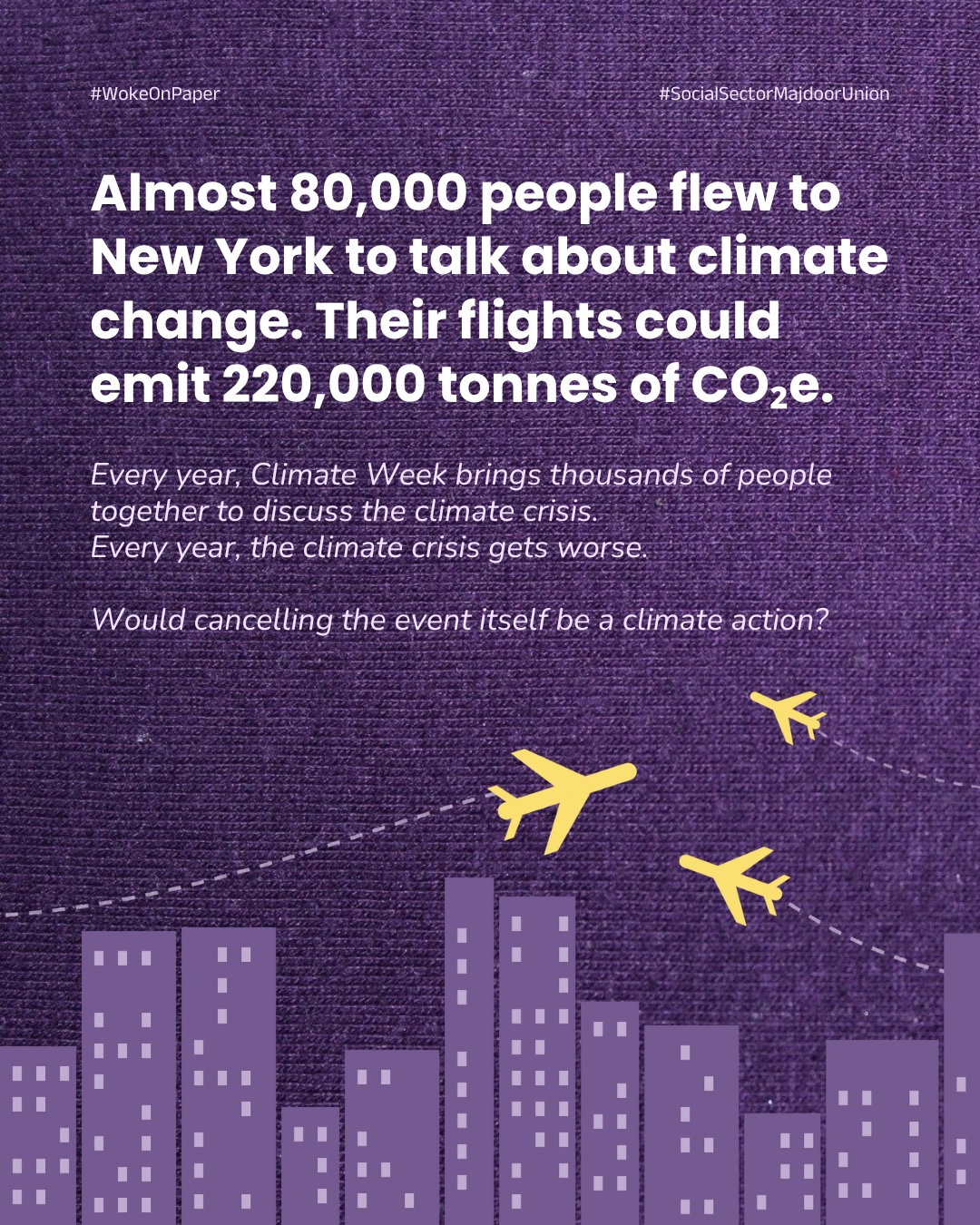
Almost 80,000 People Flew to New York to Talk About Climate Change
Their flights to Climate Week NYC could emit 220,000 tonnes of CO₂e. Would cancelling the event itself be a climate action?

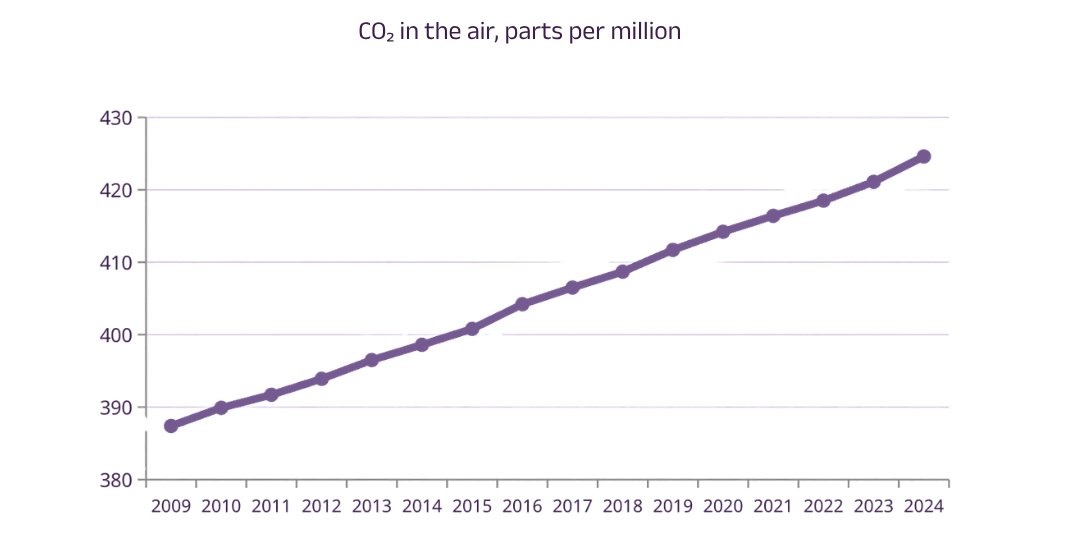
Eighteen Climate Weeks Later, the CO₂ Curve Still Has Not Got the Memo
Climate Week began in 2009, when the air held about 387 parts per million of CO₂. By 2024 it held about 425. In 2025, fossil fuel emissions hit another record high.
The week keeps growing. So does the curve. Every dot is a year that had a Climate Week.
Saving the Planet Now Requires Everyone Who Can Afford the Flight
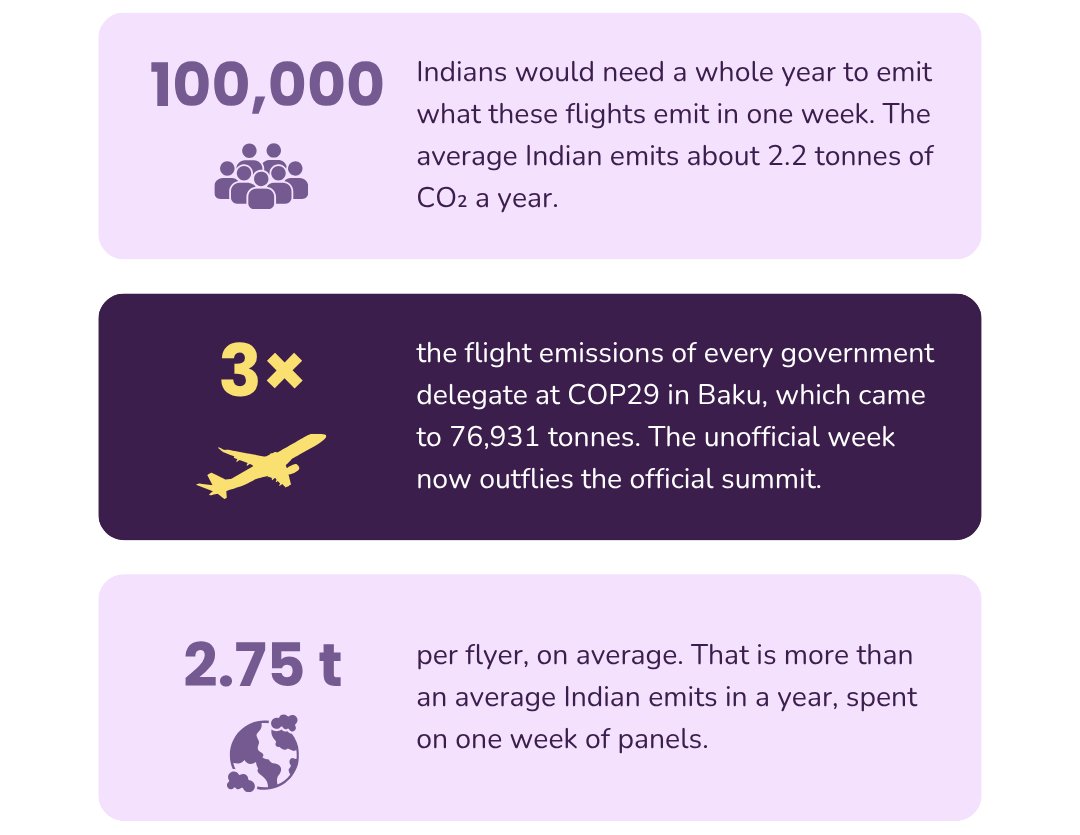
Organisers say Climate Week draws over 100,000 people. Say 8 in 10 fly in. That makes 80,000 flyers. Here is what their return trips add up to.
Change a few guesses and you land between 200,000 and 235,000 tonnes.
| Where flyers come from | Tonnes of CO₂e |
|---|---|
| North America | 20,000 |
| Europe | 81,000 |
| Asia, Africa, Latin America | 99,000 |
| Making the jet fuel | 33,000 |
| Total | ≈ 233,000 |
Source: UK DEFRA 2025 flight factors with contrail effects. Return trips of about 4,000 km, 12,000 km and 22,000 km. One in four long-haul flyers in business class, about 2.9 times the emissions per seat. Private jets not included.
What One Week in New York Looks Like for Common People
And for Those Who Find Airports Tiring
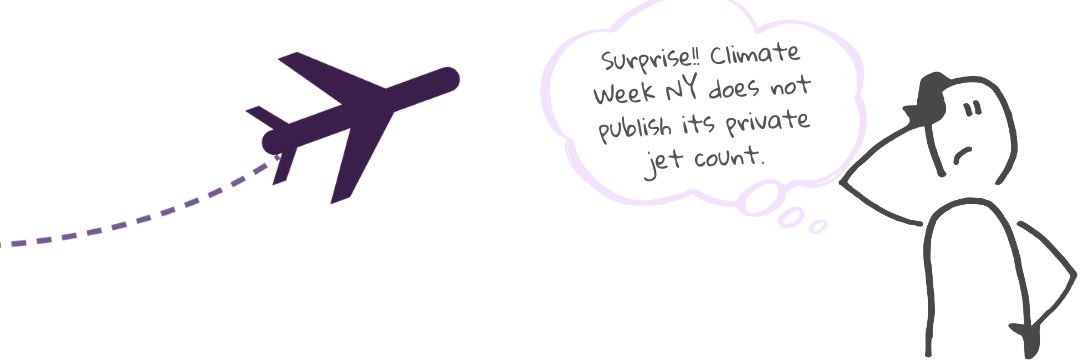
Only about 256,000 people on Earth fly private. That is 0.003% of humanity.
A private jet emits 10 to 14 times more CO₂ per passenger than a regular airliner. An average Indian needs nearly 14 years to emit that much.
Jeff Bezos flew by private jet to COP26, the UN Climate Change Conference. Aviation data compiled by WingX found that 118 business jets flew into Glasgow and Edinburgh around the beginning of COP26, with their combined emissions estimated to exceed 1,400 tonnes of CO₂. At COP27, researchers counted around 315 private jet journeys.
The Price of a Seat at the Table
Want a seat inside The Hub Live, the flagship summit? $1,100 per person, by application, two people per organisation.
Sponsors talk for free. NGOs pay a late fee to talk about the planet.
| Who is listing | By 7 August | From 8 August |
|---|---|---|
| Companies | $600 | $1,200 |
| NGOs and nonprofits | $0, donation requested (no travel & stay) | $300 |
| Sponsors and partners | $0 | $0 |
Source: Climate Week NYC 2026 terms and conditions and attend page, Emitree event guide
Some Cannot Buy a Seat at Any Price
- Since 1 January 2026, the US blocks visitor visas for people from 39 countries, including Haiti, Chad, Niger, Somalia, Sudan, Zambia and the Pacific island of Tonga. They live the climate crisis. They cannot come and discuss it.
- At the UN Indigenous forum in New York this April, Indigenous delegates reported visa denials and open hostility. Some never made it.
- The rest face hotel rooms at $550 or more a night. Climate Week offers no hotel blocks.

The Bigger Questions
But perhaps the bigger questions are not about the 220,000 tonnes alone.
What is the carbon footprint of the conference itself? Who gets access, and who gets priced out? Which nonprofits can afford to be part of it? How much of the agenda is shaped by the corporations funding it?
And after all those flights, panels and pledges, what measurable change is actually left behind, when the climate crisis is getting worse by the day?

WokeOnPaper is an independent satire media collective led by a small group of development practitioners. Through memes, stories and commentary, it reflects on the everyday absurdities of the social sector — nudging it towards becoming more honest, participatory and democratic.